A sour or acidic taste in your mouth is most often caused by acid reflux, a dry mouth, an acidic diet, certain medications, hormonal changes, or ongoing stress. It matters because a low oral pH softens tooth enamel long before you notice any damage. Most cases settle once you identify the underlying cause and restore oral pH.
Have you ever woken up with an unpleasant, sour taste in your mouth? If so, you’re not alone. At Sydney Holistic Dental Centre, patients often complain about this uncomfortable sensation. But what causes it, and more importantly, how can we address it? Here, we explain oral acidity and discover how it impacts overall health.
When to Seek Help:Persistent sour taste, heartburn, difficulty swallowing, tooth changes, sensitivity.
.
A sour taste in the mouth is more than an annoyance. It’s often a sign of an underlying issue that can have significant implications for oral and general health.”~ Dr Yin Yin Teoh
.
What a sour taste in your mouth actually means
Saliva plays a crucial role in maintaining oral health. It helps neutralise acids, wash away food particles, and maintain a balanced oral microbiome. When saliva’s pH becomes too acidic, it can lead to oral health problems, including a persistent sour taste.
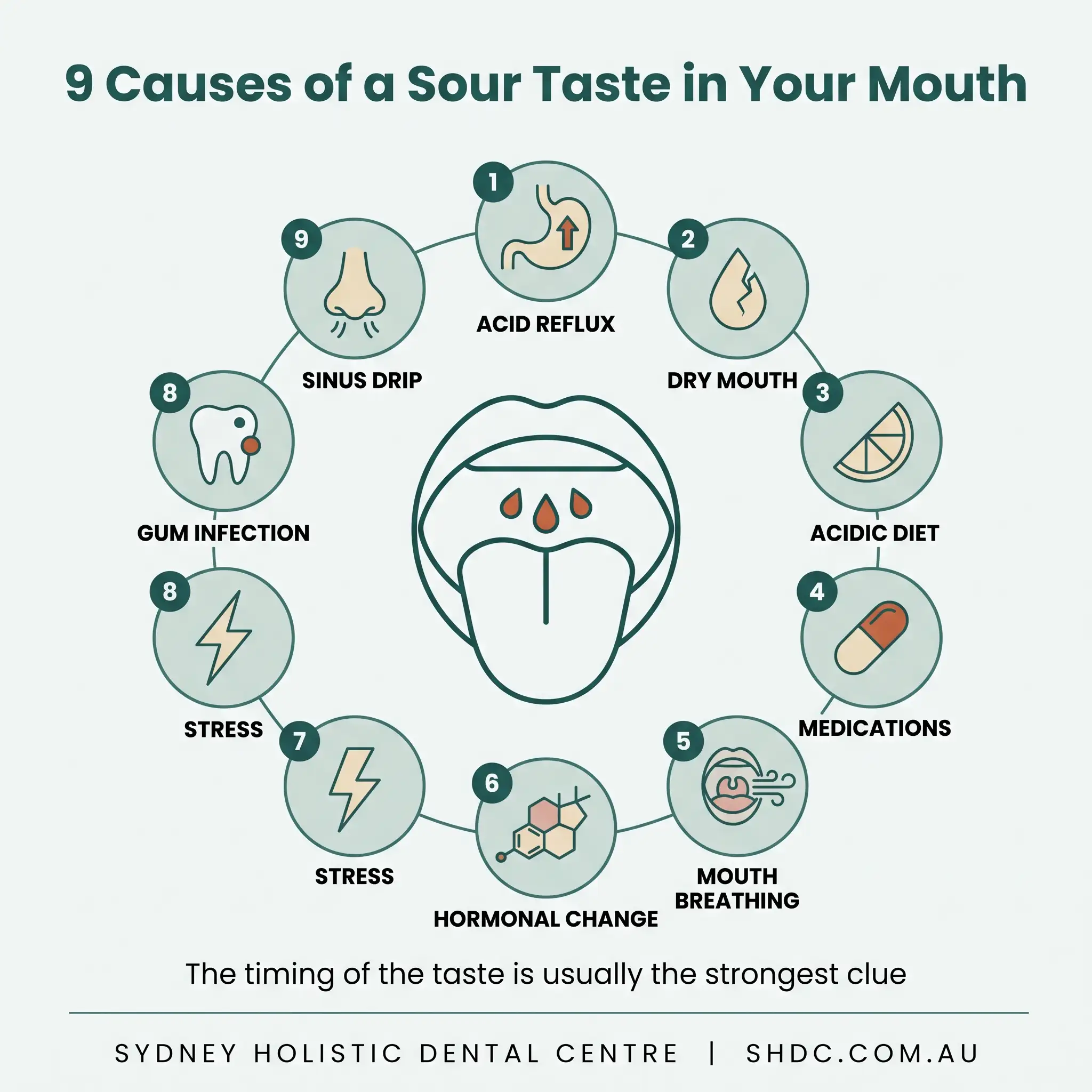
9 causes of a sour taste in your mouth
Cause
Other clues
What helps
1. Acid reflux (GERD)
Burning behind the breastbone, worse lying down, worse after large or late meals
Smaller evening meals, finish eating three hours before bed, raise the head of the bed, see your GP
2. Dry mouth
Sticky tongue, difficulty swallowing dry food, bad breath, waking with a parched mouth
Water through the day, nasal breathing, review medications with your GP
Taste localised to one area, bleeding gums, sensitivity
A dental examination
9. Sinus congestion and post-nasal drip
Blocked nose, taste at the back of the throat, recent cold
Treat the sinus cause, restore nasal breathing
Why the sour taste is worse when you wake up
Morning is the most common time to notice it, and there are three reasons for that. Saliva production drops to its lowest point overnight, so there is less of your natural buffer available. Lying flat makes it easier for stomach acid to travel up the oesophagus. And if you sleep with your mouth open, the drying effect concentrates whatever acid is present.
If the taste is reliably worse in the morning and settles through the day, start by looking at your breathing during sleep and the timing of your evening meal.
Why the sour taste appears after eating
Every time you eat, the bacteria in your mouth produce acid and your oral pH falls. In a healthy mouth it recovers within about thirty to sixty minutes. When saliva flow is low or meals and snacks are frequent, the pH never gets the chance to climb back and the sour taste lingers.
Spacing meals at least three hours apart gives your saliva time to do its work. Rinsing with plain water immediately after eating speeds up the recovery.
Restoring a healthy oral pH is what resolves the taste for most people. That means increasing saliva flow, spacing out acidic foods and drinks, breathing through your nose, and using a bicarbonate rinse where appropriate.
A sour taste that comes and goes with an obvious trigger is rarely a concern. Book an appointment when any of the following apply.
The taste has persisted every day for more than two weeks with no obvious cause.
You have burning or pain behind the breastbone, or difficulty swallowing.
Your teeth have become sensitive to cold, or you can see thinning, translucency or cupping on the biting surfaces.
The taste is metallic or foul rather than sour, or it is coming from one specific area.
You have unexplained weight loss, a persistent cough or a hoarse voice.
Persistent oral acidity can erode enamel silently for years. Enamel does not grow back, so identifying the cause early is what protects the teeth you have.
Diet: Foods and beverages can significantly impact oral pH. Acidic items such as citrus fruits, tomatoes, coffee, and carbonated drinks can lower the pH in your mouth, contributing to increased salivary acidity.
Gastroesophageal Reflux Disease (GERD) is a chronic condition in which stomach acid flows back into the esophagus and mouth. This regurgitation of acidic content can dramatically increase oral acidity.
Medications: Certain medications, including some chemotherapy drugs, antihistamines, and antidepressants, can alter salivary composition and pH balance.
Dry Mouth (Xerostomia): Saliva is important in neutralising acids. When saliva production decreases, the oral environment can become more acidic.
Hormonal Changes: Fluctuations in hormone levels, such as during pregnancy or menopause, can affect oral pH balance.
Stress and Anxiety: High-stress levels can lead to changes in saliva production and composition, potentially contributing to increased acidity.
Reflux and dental erosion: the connection
Recent research has highlighted a significant link between GERD and dental erosion. Dr Teoh explains:
“GERD is more than just a digestive issue. It can seriously affect oral health, particularly contributing to dental erosion. The constant exposure of teeth to stomach acid can lead to significant enamel loss over time.”
A study on the “Association of Gastroesophageal Reflux Disease With Dental Erosion” provides crucial insights:
GERD involves the continuous leakage of acid-containing contents from the stomach into the esophagus.
Dental erosion (DE) is defined as tooth surface loss due to acids, including stomach acid.
Gastric acids are extremely potent and can cause substantial damage to tooth enamel.
The interaction of gastric juice, pepsin, and acid can significantly erode dental hard tissues.
What a sour taste does to your teeth
Increased salivary acidity doesn’t just leave an unpleasant taste in your mouth. Its effects can be far-reaching:
Enamel Erosion: Acidic saliva can gradually erode tooth enamel, the protective outer layer of your teeth. This makes teeth more vulnerable to decay, sensitivity and enamel discolouration.
Tooth Decay and Cavities: An acidic oral environment promotes the growth of cavity-causing bacteria, accelerating tooth decay.
Halitosis (Bad Breath): The acidic environment can foster bacterial growth, leading to persistent bad breath.
Tooth Sensitivity: As enamel erodes, it exposes the underlying dentin, leading to increased sensitivity to hot, cold, or sweet stimuli.
Increased Risk of Oral Infections: An acidic environment can disrupt the balance of oral bacteria, potentially increasing the risk of oral infections.
.
How to get rid of a sour taste in your mouth
At Sydney Holistic Dental Centre, we believe in addressing oral health issues from a whole-body perspective. Here are some of the aspects of a comprehensive approach to managing salivary acidity:
Dietary Adjustments:
Limit consumption of acidic foods and beverages.
Incorporate alkaline foods such as lima beans, soybeans, sesame seeds, and navy beans.
Consider using a straw when drinking acidic beverages to minimise contact with teeth.
Hydration: Proper hydration is crucial for maintaining optimal oral health.
Aim to drink at least eight glasses of water daily.
Consume hydrating foods like cucumber, watermelon, and celery.
Consult your dentist about using a pH-balanced mouthwash to help neutralise acids.
Oral Hygiene:
Brush teeth at least twice daily with a soft-bristled toothbrush and quality toothpaste.
Floss daily to remove food particles and plaque between teeth.
Use a tongue scraper to remove bacteria from the tongue surface.
Discuss with your dentist using an alkaline mouthwash to help neutralise acids.
Addressing GERD: If GERD is a contributing factor, management is crucial; work with a healthcare provider to manage GERD symptoms effectively.
Eat smaller, more frequent meals to reduce stomach acid production.
Avoid lying down immediately after eating.
Elevate the head of your bed to prevent nighttime reflux.
Stress Management: Chronic stress can impact oral health in numerous ways:
Practice relaxation techniques such as meditation or deep breathing exercises.
Engage in regular physical activity.
Ensure adequate sleep to help manage stress levels.
Regular Dental Check-ups: Regular visits to Sydney Holistic Dental Centre allow us to monitor your oral health and address issues promptly:
Schedule bi-annual check-ups and professional cleanings.
Discuss any persistent sour taste or other oral health concerns with your dentist.
Adequate hydration isn’t just about quenching thirst. It’s key to maintaining optimal oral pH balance. Water helps stimulate saliva production, naturally cleansing the mouth and neutralising acids. ~ Dr Yin Yin Teoh
Specific Foods and Practices to Combat Sour Mouth
Certain foods and practices can help neutralise acids and promote oral health:
All-natural sugar-free Gum and Mints: Stimulate saliva production to help neutralise acids.
Alkaline Foods: Incorporate vegetables, fruit, nuts, and legumes such as beets, broccoli, mushrooms, peas, apple, cherries, pineapple, almonds and pumpkin seeds to help balance oral pH.
Probiotic-rich Foods: Yoghurt, kefir, sauerkraut, and other probiotic-rich foods can help maintain a healthy oral microbiome.
Green Tea: Rich in polyphenols, green tea can help reduce bacterial growth and freshen your breath.
Crunchy Fruits and Vegetables: Apples, carrots, and celery can help mechanically clean teeth and stimulate saliva production.
Herbs and Spices: Parsley, mint, cinnamon, and fennel seeds can help mask sour tastes and freshen breath.
When a sour taste needs professional attention
While these strategies can help to manage mild cases of sour mouth effectively, persistent symptoms warrant professional attention. Dr Teoh advises:
“If you’re experiencing a persistent sour taste despite implementing these measures, seeking professional help is crucial. At Sydney Holistic Dental Centre, we offer comprehensive assessments to identify the root cause of your sour mouth and develop a personalised treatment plan.”
Consider scheduling an appointment if you experience:
Persistent sour taste lasting more than two weeks
Accompanying symptoms such as frequent heartburn or difficulty swallowing
Visible changes to your teeth, such as increased transparency or yellowing
Increased tooth sensitivity
The holistic view
A sour taste in your mouth is more than just an annoyance – it’s often a sign of an underlying issue that requires attention. By understanding the causes and implementing a holistic approach to management, you can restore balance to your oral environment and improve your overall health.
Remember, your mouth is the gateway to your body’s health. Taking care of your oral health is an investment in your overall wellbeing. At Sydney Holistic Dental Centre, we’re committed to helping you achieve optimal oral health through our comprehensive, patient-centered approach.
Don’t let a sour mouth impact your quality of life. Take the first step towards a healthier, more balanced oral environment today.
Ready to address your sour mouth concerns? Book an appointment at Sydney Holistic Dental Centre. Let’s work together towards a healthier, happier you!
Frequently asked questions
Q. Why do I have a sour taste in my mouth all the time?
A. A constant sour taste usually points to acid reflux, chronic dry mouth or an ongoing dietary source of acid. Medication side effects and mouth breathing during sleep are the next most common causes. When it has lasted more than two weeks without an obvious trigger, it is worth having both a dental examination and a discussion with your GP.
Q. Why is the sour taste worse in the morning?
A. Saliva production falls to its lowest point overnight, so your natural acid buffer is at its weakest. Lying flat makes reflux easier, and sleeping with your mouth open dries the mouth further. Those three factors together explain why mornings are the most common time to notice it.
Q. Is a sour taste in your mouth serious?
A. On its own it is usually not serious, though it is a signal worth reading. It becomes important when it persists daily for more than two weeks, when it comes with burning behind the breastbone or difficulty swallowing, or when your teeth are becoming sensitive or visibly thinner. Any of those warrants professional assessment.
Q. How do you get rid of a sour taste in your mouth?
A. Identify and address the cause first. Alongside that, rinse with plain water after eating and drinking, drink water steadily through the day, breathe through your nose, space meals at least three hours apart, and use a bicarbonate rinse to bring your oral pH back up. Avoid brushing for 30 to 60 minutes after anything acidic.
Q. Can a sour taste in your mouth damage your teeth?
A. The taste itself causes no damage. The acidity behind it does. Enamel begins to dissolve below a pH of 5.5, and repeated exposure causes erosion that shows as thinning, sensitivity, translucent edges and cupped biting surfaces. Enamel does not regenerate, so the erosion is permanent.
Q. Does a sour taste always mean acid reflux?
A. No. Reflux is the most common single cause and accounts for a large share of cases. Dry mouth, diet, medication, mouth breathing, hormonal change, gum infection and sinus problems all produce the same symptom. The pattern of when it appears is usually the most useful clue.
A sour taste that will not shift deserves a proper look.
Nine common causes of a sour taste. The timing of the taste is usually the strongest clue.
References:
Journal of Dental Research: Socransky, S. S., & Haffajee, A. D. (2005). Periodontal microbial ecology. Periodontology 2000, 38(1), 135-187. [PubMed: 15853940] Discusses the microbiology of periodontal disease, which can be linked to poor oral hygiene and its effects on oral health, including sour taste.
Journal of Clinical Periodontology: Kinane, D. F. (2001). Causation and pathogenesis of periodontal disease. Periodontology 2000, 25, 8-20. [PubMed: 11155179. Insights into the causes and development of periodontal disease, a condition that can contribute to increased salivary acidity and sour taste.
Journal of Dental Education: Horowitz, A. M., Siriphant, P., Sheikh, A., et al. (2001). Perspectives of Maryland dentists on oral cancer. Journal of the American Dental Association, 132(1), 65-72. [PubMed: 11194401] Highlights the importance of dental professionals in identifying and managing oral health conditions, including those that can cause a sour taste.
Journal of Periodontology: Taylor, G. W. (2001). Bidirectional interrelationships between diabetes and periodontal diseases: an epidemiologic perspective. Annals of Periodontology, 6(1), 99-112. [PubMed: 11887478]. Discusses the relationship between systemic conditions like diabetes and periodontal diseases, which can also impact oral health and contribute to sour taste.